Seasonal Bedding & Sleep Comfort
Wool Comforters Through the Seasons: Warmth, Care, and Sleep Comfort
The best bedding does more than add a final layer of softness. It helps make the bed feel comfortable through changing temperatures, keeps nightly routines simple, and invites the body to settle. Wool comforters offer a distinctive balance: cozy insulation, a breathable feel, and an ability to manage moisture. Understanding fill weight, room conditions, and care can help you decide whether wool belongs in your year-round sleep routine.
Published November 14, 2026
Seasonal bedding often prompts a familiar question: should the comforter be changed when the weather shifts, or can one well-chosen layer work across much of the year? Wool makes the question more interesting. Rather than relying solely on a thick, heavy feel for warmth, wool fill can provide insulation while allowing moisture to move away from the body. That combination may suit sleepers who want a comfortable bed without feeling trapped beneath a stuffy layer.
There is no universal comforter for every bedroom. A cool, drafty room presents different needs from a warm apartment, and a sleeper who runs hot may prefer a lighter fill even in winter. Personal comfort, the room’s temperature, the other bedding layers, and the way a comforter is cared for all influence the experience. Think of wool not as a promise of perfect sleep, but as one useful element in a considered sleep environment.
This guide looks at how wool comforters can work across seasons, how to choose a suitable weight, and how to keep an insert fresh without washing it more than necessary. It also considers practical details such as duvet covers, airing, spot-cleaning, and reading the care label before taking action.
Why wool can feel warm without feeling stuffy
Wool fibers have a natural structure that helps trap air, creating insulation. At the same time, wool can absorb and release moisture, a property that contributes to a less clammy feeling for some sleepers. The precise comfort depends on the fill, construction, cover fabric, room conditions, and individual preferences, but the general appeal is clear: a wool comforter can feel warm and substantial while remaining more breathable than its weight might suggest.
Temperature regulation is not the same as active temperature control. A comforter cannot set the room to a particular temperature or guarantee that every sleeper will feel comfortable. Instead, its materials and construction influence how warmth and moisture are experienced beneath the bedding. If a sleeper tends to overheat, lighter wool fill and breathable sheets may help create a less insulated arrangement. Someone who feels cold at night may prefer a heavier option, or a lighter comforter paired with warmer sleepwear and layers.
It is useful to distinguish between the warmth of a comforter and its weight in the hand. A dense or heavy textile can feel reassuring, but physical weight alone does not determine thermal comfort. Wool’s loft and fill amount, along with the cover fabric and room climate, are more relevant considerations. Look at the manufacturer’s specifications, ask how the comforter is intended to be used, and consider whether you usually sleep warm, cool, or somewhere between.
For people interested in wool bedding, the Sleep and Beyond myComforter is described as being filled with washable wool and encased in cotton sateen. Its care guidance recommends using a removable duvet cover, airing the comforter, and limiting frequent washing. As with any bedding, check the current product label and instructions for the particular item you own before cleaning it.
Choosing a wool comforter weight
Comforter weight is best understood in context. A product’s fill quantity may indicate whether it is intended to feel lighter or warmer, but the right choice depends on the room and the sleeper. Start with how you feel at bedtime and on waking, rather than choosing according to the season alone. A bedroom that stays cool through summer may call for a different solution from a heavily heated winter room.
A lighter option for warm rooms and hot sleepers
A lighter wool comforter may suit people who keep the bedroom cool, live in a warmer climate, or prefer a minimal layer. It can provide a soft covering without the same degree of insulation as a heavier comforter. The Sleep and Beyond myComforter Light, for example, is described as a lighter-weight choice for warmer seasons and climates, or for sleepers who want a touch of warmth rather than a substantial winter layer.
Lightweight does not mean suitable for everyone in every summer bedroom. Humidity, bedding fabric, room ventilation, and personal warmth all matter. If you wake feeling too warm, try making one adjustment at a time: use a lighter cover, reduce extra top layers, or change the room’s temperature if practical. This makes it easier to identify what is actually affecting comfort.
A medium weight for flexible use
A mid-weight comforter can be a practical choice for a bedroom with fairly steady temperatures or for sleepers who want one insert to use across much of the year. It may also work well when paired with a duvet cover and simple layers that can be added or removed. The aim is not to find a single bedding setup that behaves identically in every season, but to create enough flexibility that a small change can make the bed more comfortable.
Consider the whole bed as a system. Sheets, duvet cover, mattress protector, sleepwear, and the number of blankets all contribute to the way heat is retained or released. A comforter that feels ideal with a crisp, lightweight sheet may feel too warm when combined with flannel, heavy pajamas, and an extra blanket. Adjusting layers may be more useful than replacing the insert.
A warmer option for cold sleepers and cooler rooms
For a cool bedroom or someone who tends to feel cold, a warmer wool comforter may provide a welcome layer of insulation. Before choosing the heaviest option available, consider whether the room is consistently cold or only chilly at the start of the night. A warmer comforter may be comfortable in a stable cool environment but less adaptable if indoor temperatures fluctuate.
Some wool comforters are offered in different fill weights. Sleep and Beyond describes its myComforter as available in a standard and a lighter version. Product specifications, including dimensions and fill amounts, can help distinguish the options, but they are not a substitute for personal preference. If possible, review the maker’s guidance on intended warmth and follow any sizing advice for your bed.
A useful selection question: do you want the comforter to provide most of your warmth, or do you prefer a lighter insert that works alongside adjustable layers? The answer can help narrow the choice before you compare materials and care requirements.
Wool bedding through spring, summer, autumn, and winter
Seasonal changes are not only about outdoor weather. Heating, insulation, window placement, ventilation, and the number of people sharing a bed can all affect nighttime comfort. A wool comforter may be used for much of the year, but its role can shift as conditions change.
Spring: refresh the bed without overhauling it
As nights become milder, remove unnecessary layers before changing the entire bedding arrangement. Airing the comforter and laundering the duvet cover can make the bed feel refreshed while preserving the insert. If the bedroom is still cool at night, a wool comforter may remain comfortable; if warmth builds, switch to a lighter cover or reduce the layers beneath it.
Summer: keep the bed adaptable
Summer bedrooms vary widely. In a well-ventilated, air-conditioned room, a light comforter may remain pleasant, while a warm, humid room may call for a thinner covering. Breathable duvet covers and sheets can contribute to a less enclosed feel. The goal is to match the bedding to the conditions you actually sleep in, rather than following a rigid calendar.
If you find yourself pushing the comforter away during the night, try a lighter weight or use a sheet as the primary cover on warmer nights. You may still want a comforter nearby for cooler evenings. Keeping the arrangement flexible is often simpler than storing all warm bedding at the first sign of summer.
Autumn: add warmth in measured steps
When nights turn cool, wool’s insulating quality may become more noticeable. Add the comforter before resorting to several separate blankets, then assess the result over a few nights. A duvet cover helps protect the insert and gives you an easy way to refresh the visible bedding. Choose a cover that feels comfortable against the skin and suits your preferred level of airflow.
Winter: pair warmth with a comfortable room
In winter, a warmer comforter can make a cool room feel more inviting. Still, adding insulation is only one part of sleep comfort. Excessively warm bedding may cause some people to wake feeling overheated, while a cold room can make the first moments under the covers uncomfortable. Consider the balance between room temperature, sleepwear, sheets, and the comforter rather than relying on any single layer to solve every problem.
The duvet cover: a simple layer of protection
A removable duvet cover is one of the most practical ways to protect a comforter from everyday soil. It sits between the sleeper and the insert, collecting much of the skin contact, lint, and ordinary household dust that would otherwise reach the comforter’s outer shell. Because the cover can usually be washed more easily than the insert, it can help reduce the need for frequent comforter cleaning.
For a wool comforter, choose a cover that fits properly and allows the insert to lie smoothly. Internal ties can help keep the comforter in place, while a secure closure makes it easier to put on and remove. A breathable fabric may be appealing if temperature is a concern, though the best choice depends on your preferred feel and care routine.
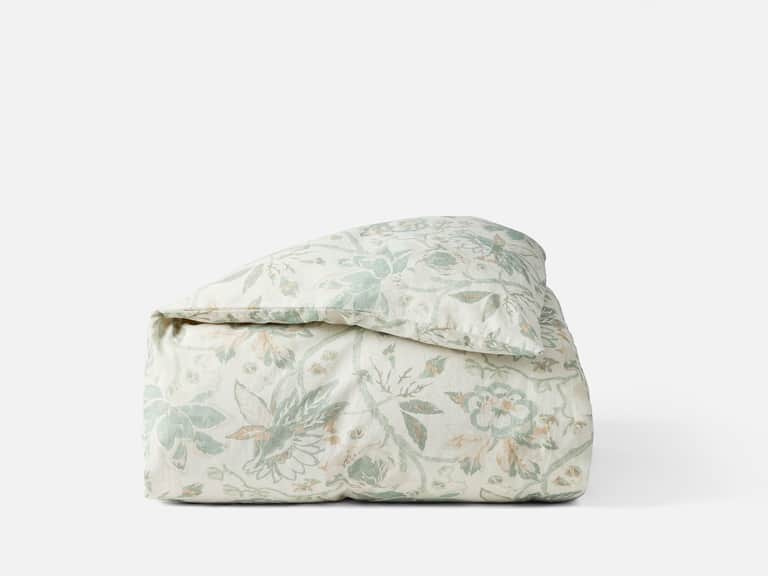
The Sea Bloom Print Duvet Cover combines pre-consumer recycled linen with organic cotton and includes internal ties and coconut shell button closures. Its composition and construction make it a relevant example of a removable layer intended to enclose a duvet insert. Check the listed dimensions against your comforter, since a well-fitting cover is important for both appearance and ease of use.
Wash the cover according to its own care label, not the comforter’s instructions. Different fibers and finishes can require different temperatures or drying methods. Removing and laundering the cover regularly—at a frequency that suits your household—can help keep bedding fresh without subjecting the wool insert to unnecessary washing.
Care habits that help preserve a wool comforter
Good comforter care is less about frequent intervention than about appropriate, consistent habits. Wool fill can be sensitive to rough handling, excessive agitation, and unsuitable cleaning products. Follow the label first, especially because materials and construction vary between comforters. If the instructions differ from general advice, the care label takes priority.
Air the comforter periodically
Airing gives bedding an opportunity to release everyday moisture and helps it feel fresh between wash days. Follow the manufacturer’s guidance about where and how to air the comforter. A dry, well-ventilated space is generally more suitable than a damp room. Avoid leaving bedding in direct, intense sunlight unless the maker specifically recommends it, since prolonged exposure can affect fabrics and color.
When making the bed, you can also leave it turned back briefly to let residual warmth and moisture dissipate before covering it for the day. This small routine requires no special equipment and can make a room feel less closed up. It is not a substitute for washing a duvet cover or addressing stains, but it can support a simple bedding refresh.
Spot-clean small marks promptly
For a small spill or mark, check the care label before applying water or detergent. If spot-cleaning is permitted, use a gentle approach and avoid saturating the fill. Blot rather than scrub, and ensure the area dries completely before the comforter is covered or stored. Trapped dampness can create an unpleasant smell and may affect the comforter’s condition.
Keep strong fragrances, bleach, and harsh cleaning agents away unless the manufacturer explicitly says they are suitable. Products intended for another fabric or surface may damage the comforter’s shell or fill. When a stain is extensive or difficult to remove, professional cleaning may be the safer option if the care instructions allow it.
Wash only when the instructions call for it
Washing a comforter too often can be hard on its filling and construction. A duvet cover provides a washable barrier, while spot-cleaning and airing can address some routine needs. If full washing is permitted, use only the method specified by the maker. Wool care may require a delicate cycle, a wool-appropriate detergent, minimal agitation, and careful drying. Do not assume that a machine-washable label means every washer or drying setting is appropriate.
Some wool comforters should not be spun or dried with high heat. Others may have specific professional-cleaning instructions. Never improvise with a full wash if the label is missing or unclear; consult the manufacturer or a qualified cleaner instead. It is especially important to confirm that the comforter is fully dry before returning it to the bed or placing it in storage.
Store it clean and completely dry
When a comforter is not in use, allow it to air and make sure it is thoroughly dry before storing. Choose a clean, dry place with room for the textile to breathe. Avoid compressing wool bedding tightly for long periods unless the manufacturer recommends a particular storage method. A breathable storage bag can help keep dust away while reducing the chance of trapping moisture.
Building a cleaner, calmer sleep environment
A comfortable bed is part of a larger bedroom routine. The condition of sheets and covers, the amount of clutter around the bed, room temperature, and the ease of changing bedding can all affect how restful the space feels. A wool comforter does not need elaborate upkeep: a protective cover, periodic airing, and clear care instructions can make maintenance manageable.
Keep the routine proportionate. Wash the duvet cover on a schedule that reflects your household and preferences, and attend to spills promptly. Fluff and smooth the comforter gently if needed, following its construction and care guidance. Avoid vigorous shaking or pulling at seams, which may place unnecessary strain on the textile. A tidy bed need not look perfectly styled; the priority is a clean, comfortable surface that feels ready for rest.
If allergies or sensitivities are a concern, consider the whole bedroom rather than focusing on one material. Washable covers, regular laundering of sheets, and a mattress protector may be useful elements of a broader plan, but individual needs differ. For persistent symptoms or health questions, seek advice from an appropriate health professional rather than relying on bedding choices alone.
A practical wool-comforter checklist
- Consider whether you generally sleep warm, cool, or comfortably between the two.
- Compare the comforter’s weight and fill details with your bedroom climate and heating habits.
- Think about the other layers on the bed, including sheets, sleepwear, and extra blankets.
- Choose a duvet cover that fits the insert and can be laundered according to its own care label.
- Air the comforter when appropriate, and make sure it is dry before covering or storing it.
- Spot-clean only when allowed by the manufacturer, using a gentle method and minimal moisture.
- Read the care instructions before washing; do not assume all wool comforters are maintained alike.
- Adjust one layer at a time when seasonal temperatures change, so you can identify what improves comfort.
Frequently asked questions
Can a wool comforter be used year-round?
It can be suitable for use through much of the year for some sleepers, particularly when its weight suits the room and the duvet cover and other layers can be adjusted. In warmer conditions, a lighter wool comforter or a sheet may feel more comfortable. In colder weather, a heavier option or an additional layer may be preferred.
Does wool guarantee that I will sleep cooler?
No. Wool can help manage warmth and moisture, but it does not guarantee a particular temperature or sleep outcome. Comfort depends on the comforter’s construction, room conditions, other bedding, and your own preferences. If you often wake too warm, consider a lighter overall bedding arrangement and adjust it gradually.
How often should I wash a wool comforter?
Follow the care label rather than a fixed schedule. Using a duvet cover, airing the comforter, and spot-cleaning where permitted may reduce the need for full washing. When cleaning is necessary, use only the method recommended for that specific comforter.
Is a duvet cover necessary?
A cover is not always required, but it is a practical protective layer. It can collect everyday soil and is generally simpler to remove and wash than the comforter insert. A correctly sized cover also helps keep the bed looking neat and can make seasonal bedding changes easier.
What should I do if my comforter develops an odor?
First check the care instructions and assess whether the comforter is damp. Air it in a suitable, dry, well-ventilated place if the label permits, and ensure it is fully dry before use. If an odor persists, or if the comforter has been affected by a substantial spill, consult the manufacturer or a qualified cleaner about safe next steps.
The considered comfort of seasonal bedding
Wool comforters offer a thoughtful alternative for sleepers seeking insulation without an overly heavy or stuffy feel. The right choice is not determined by season alone: fill weight, bedroom temperature, personal warmth, and the rest of the bedding all matter. A lighter wool option may work well in a warm room, while a warmer version can be appealing when nights turn cool. Between those extremes, flexible layers provide room to adapt.
Care can remain simple. Protect the insert with a removable duvet cover, air it periodically, address small marks carefully, and follow the manufacturer’s cleaning instructions. These habits help preserve the comforter while keeping the bed fresh. Ultimately, good seasonal bedding is less about chasing a perfect formula and more about noticing what feels comfortable, then making small, deliberate changes that support a calmer night’s rest.